Resume Format for First Job: Australian Graduate Guide 2026

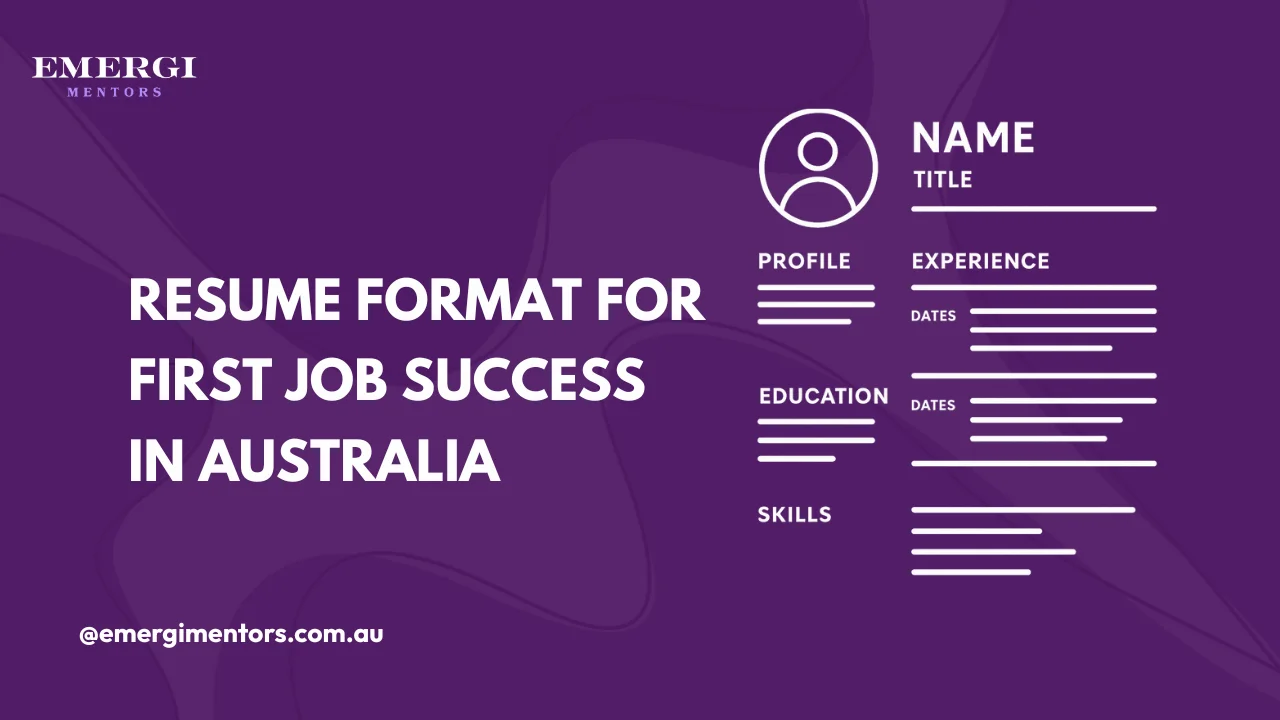
You have been staring at your resume, wondering where the issue is. Getting help from a professional helps you see your resume as employers see it, not how you imagine it looks. Most of the recruiters spend only 6 seconds on your resume; that's barely enough time to read your name and decide if they want to keep going. Whether you're a recent graduate or career switcher, the right resume format can increase your chances of getting hired. Applying for your first job can get stressful, especially when you keep getting rejected and are unsure about the right resume format for first job applications.
The ideal resume format for first job should be a clean, properly structured resume with focus keywords, measurable achievements, and ATS-friendly formatting that showcases your abilities. Even if you have little professional experience, using proper structure makes your resume strong. We’ll walk you through creating a resume that highlights your education, transferable skills, and early experience that Australian employers look for.
Why Resume Format Matters for Entry-Level Position
For entry-level job seekers, choosing the correct resume format for your first job applications is important. One of our mentees, Zac, sent us his CV, which was totally wrong; he used Comic Sans fonts, his high school basketball award, and a bright blue border. Zac was confused why he wasn’t getting callbacks. We told him what was wrong with his resume. A job application is not about how beautiful it looks; hiring managers prefer clean and professional layouts, not colorful designs and fonts.
In Austalai, youth had the lowest employment rate at 63.6% in June 2025, according to AIHW data. Competition among entry level positions is strong and most candidates make mistakes that cost them jobs. Getting professional guidance is the first step for entry-level candidates to create a strong resume that lands interviews.
Entry-level resumes need a different strategy than experienced professional resumes. You're not trying to show off 10 years of achievement. You're trying to prove you're suitable for the job despite having almost no professional experience. Your CV should focus on your education, internships, transferrable skills, and relevant projects. Now, hiring relies on Application Tracking Systems (ATS) for filtering resumes before human eyes see them. About 75% of Australian employers and 90% of ASX 200 companies are now using this ATS system.
ATS scans for keywords and checks your formatting, so make sure everything is readable. If your resume has tables, weird fonts, or graphics, or if you've titled a section "My Awesome Skills" instead of just "Skills" it'll be rejected.

Required Sections for Your First Job Resume Format
Contact Information and Summary
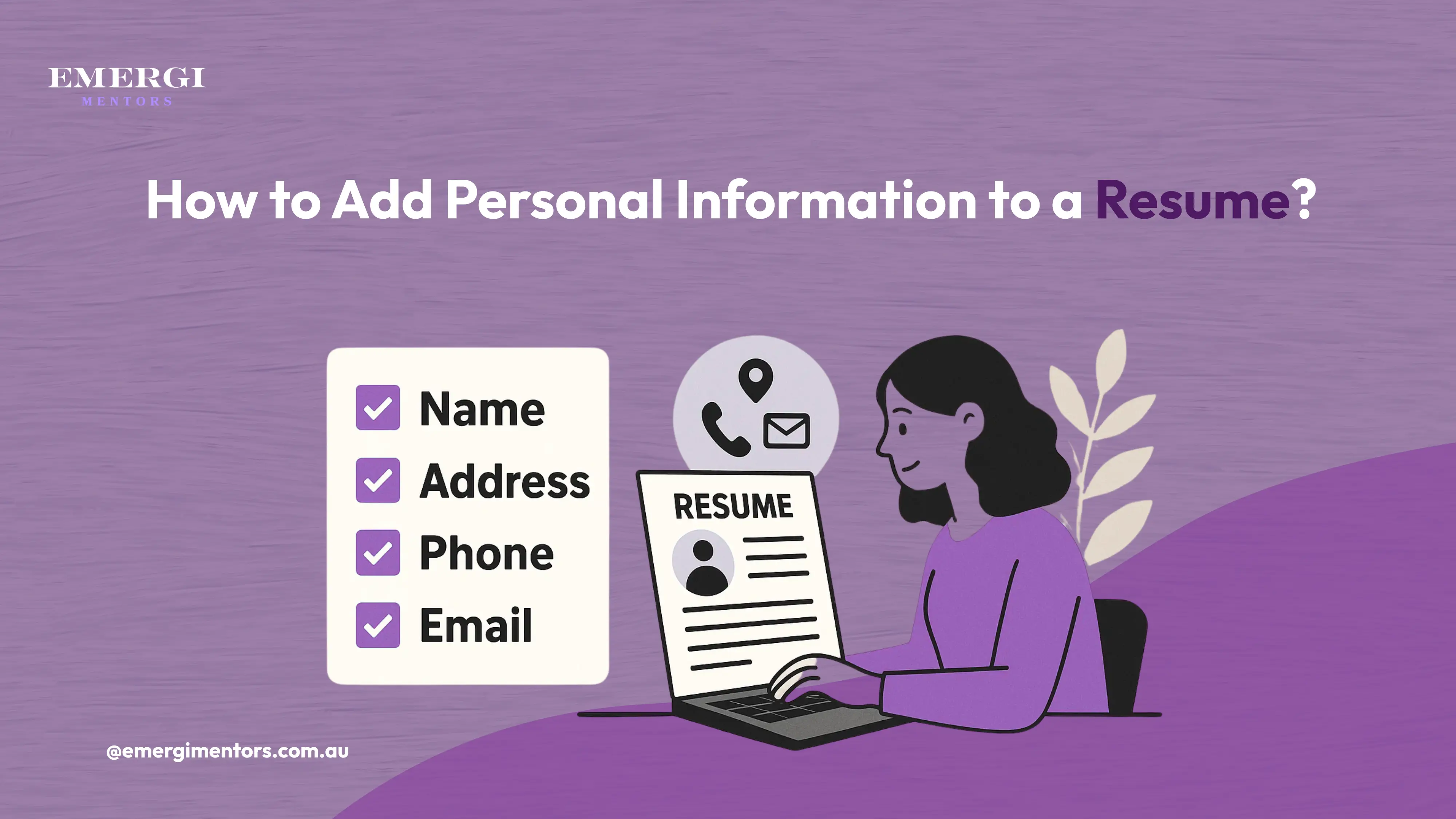
At the top of your resume, add your full name, contact number, LinkedIn profile, and email address. We have seen people add their full address or marital status, which is unnecessary, just including your city and state in your resume is enough. Then write a professional summary that highlights your career objectives and key strengths in 2-3 sentences. Your professional summary should answer the question of “Why should we interview you?” Avoid adding a photo unless applying for roles where appearance is job-relevant, like model or actor. Employers cannot request personal information unrelated to job performance due to the Australian privacy legislation and anti-discrimination laws.
The resume header is the main hook; keep it professional and focused. Graduates should start their summary with their degree and specialisation, highlighting a few relevant skills or experiences, and use specific keywords from the job description.
Pro tip: Customise the resume summary for each role you are targeting. A generic summary shows a lack of interest in the job.
Education Section
It’s the most important section for graduates and entry-level job seekers. Unlike experienced workers, your degree is your strongest selling point right now. Add your degree, university, institution, graduation date and any relevant courses to your resume. If you’re wondering, 'Should I put my GPA on my resume?', You can add GPA if 5.5 or higher; you don’t need to add a low GP score. Also highlight projects, achievements, and thesis work that demonstrates your skills related to your role. You can also mention any academic awards or scholarships. And if you have a capstone project, add a "Relevant Projects" subsection to talk about it. What problem did you solve with it, and why should employers care?
Skill-Based Approach
When you have low work experience, this section is your secret tool. Create a separate section that includes both technical and soft skills specific to your industry. Include any software skills, languages, certifications, and soft skills compatible with the job descriptions of the role you are targeting.
Professionals use the achievement formula (Action Verb + Task + Method/Tool + Quantifiable Result) for their first job resume format. We know this may seem weird but this is what recruiters are looking for. Your skill section will get past you through ATS systems and show recruiters that you have the required capabilities.
Pro tip from someone who's reviewed hundreds of resumes: Don’t rate your skills with bars or percentages; this is old-fashioned and takes valuable space, and the ATS system can’t read them. Simply adding the skills in a list is enough.

Additional Sections on Resume
Adding a few more optional sections can differentiate you from other candidates. If you have gained any certifications related to the target role, you should add them under the Certifications and Licenses section. You can also list your professional licenses, like First Aid and RSA/RCG, in your resume.
A language section can be added if you know 2-3 languages other than your native language. Also mention proficiency level (conversational, native, business).
Three Effective Resume Formats for First Job
There are three main resume formats and choosing the wrong one can reduce your chances of getting a job. Selecting the right resume format depends on your situation as a first-time job seeker. Each format has different purposes and highlights different strengths. Here’s how to choose:
Chronological Format
Chronological format is best for graduates with relevant work experience, internships, or any part-time job. This traditional format helps in listing experience in reverse chronological order. Using a format where your recent experience is related to your career goals works well.
This format will
Prominently position education section near the top
Work experience, listed with most resent first, includes internship and casual work
Has clear dates
Easy for both ATS and recruiters to scan quickly
You should not use this format if you have large employment gaps or if your work history is completely unrelated to your role.
Functional Format (Skill Based)
Career changers or those with limited work experience find this format ideal for their resumes. This format points out skills and achievements over employment history. Y ou add your capabilities in groups under one heading like "Technical Skills", "Leadership Skills", or "Communication Abilities". It focuses on what you can do rather than where you've done it.
The functional format is best for individuals with broad experiences (volunteering, extracurriculars, projects) that don't fit neatly into job titles. You can add a brief history section at the end and highlight transferrable skills from different experiences.
Be careful in using this format, as recruiters often sense that a candidate using this format is hiding something. Make sure you're still including a basic employment period while using this format wisely.
Combination Format/Hybrid format
Most entry-level job seekers use this hybrid approach. It highlights both skills and chronological experience. Starting with a short skills summary, follow with your work history. This format allows you to show transferrable skills while providing the job period employers expect. Australian graduates often use this format.
How to use this format:
Open with a powerful skill or qualification summary, then add work experience chronologically. Show your skills and balance them with a transparent work history. It also allows you to place casual jobs within your professional story. This resume format performs very well instead of a chronological resume for candidates with relevant experience.
Australian-Specific Resume Considerations
Australian employers have different expectations than what you'll see in American resume guides on YouTube. Keep your resume short; 2-3 pages maximum. Avoid including photos and focus on achievements rather than duties. Use specific terms and CV power words that Australians often use. Save your resume with a professional name as FirstName_LastName_Resume.docx. ATS trackers mostly prefer a docx. File. A PDF format is only used if requested.
ATS-Friendly Formatting
Creating an ATS-friendly resume in 2026 is a must. We put this in a table because the numbers are significant here:
Layout & Design Standards | Best Practice |
Margins | 1-inch (2.54 cm) on all sides |
Font size | 0-12pt for body text, 14-16pt for name, 12-14pt for section headers |
Font choice | Arial, Calibri, Garamond, or Georgia (avoid fancy fonts) |
Line spacing | 1.15 to 1.5 for readability |
Resume length | 1-2 pages (1 page ideal for fresh graduates) |
Common First Resume Mistakes to Avoid
Let us reveal what mistakes many job seekers applying for the first time make that immediately reveal their inexperience. From using unprofessional email addresses, inconsistent formatting to adding too much information onto one page.
Don’t include references on your resume. Simply say, "Reference is available upon request." Generic resumes also never work. Customize your resume format for every job application in each industry you are targeting. What works for an engineering role won't work for a management role.
Avoid ATS-breaking elements like tables and text boxes and use spaces and tabs instead. Adding Images, logos, or graphics and too many columns is not good for ATS. Use a single column layout. Special characters or symbols except standard bullets won’t pass ATS. If someone names section headings oddly, ATS systems reject their resume.
Next Steps: From Resume to Interview
Your first resume won’t be perfect, mine definitely was not. But if you follow these instructions, you’ll be far ahead of most of the entry-level candidates. Begin by quantifying achievements wherever possible, even from part-time jobs, volunteer work, or university projects. Instead of "Helped with customer service," write "Assisted 50+ customers daily, maintaining a 95% satisfaction rating." These details demonstrate impact and professionalism.
Include relevant volunteer work, extracurricular activities, and projects that showcase skills applicable to your target position. Australian employers value an all-round candidate who shows community dedication and an initiative nature.
While you’re still learning formatting rules, identifying your transferrable skills and trying to stand out among hundreds of applicants, that’s where expert guidance makes a measurable difference. The online resume review services provide template feedback; working with a mentor in your target industry offers insider knowledge and helps you understand what format and keywords get past ATS systems and reach recruiters’ eyes. Remember, your first job resume is not just a document but your marketing tool in the job market. Use it wisely and seek guidance from someone who has walked the path before you.
Frequently Asked Questions
How long should a resume be for your first job in Australia?
Ideally, a one-page resume is considered good for recent graduates and first-time job seekers. Australian employers prefer a focused and concise document over a lengthy one. You can have a two-page resume if you have enough work experience from volunteer work, internships, and projects to show.
Should I include a photo on my resume?
No, a photo is not needed unless you are applying for modelling or acting roles. Australian anti-discrimination legislation discourages adding a photo to your resume to prevent bias.
What if I have no work experience at all for my first resume?
If you don’t have any work experience to show for your first resume, focus completely on your education by including relevant coursework, academic projects, and thesis work. Add volunteer experiences, student organization leadership, extracurricular activities, and any informal work like tutoring, and present them in a professional language with measurable results.
How do I make my resume ATS-friendly without making it look boring?
You can make a clean resume with proper formatting and appropriate white spaces. Use bold headings and create a visual hierarchy through organised sections. Avoid tables, graphics, charts and unusual formatting.
What's the difference between a resume and a CV in Australia?
A resume highlights your experience and skills for a specific job in a 1-2 page document, while a CV (curriculum vitae) is mostly a record of your academic achievements and professional history. A CV is typically used for academic, research, or medical positions, but for most graduate jobs, you need a resume.
Should I include my GPA or WAM on my resume?
Include your GPA only if it’s strong (5.5/7 or higher) and your WAM is 78% or above, or if you achieved high distinction. If you had lower GPA but excelled in specific subjects, list those courses instead.