Land Your Next Tech Role with Practical Resume Analysis Tools

In tech, your resume is often the gatekeeper to interviews. A resume analysis tool gives focused, actionable feedback by comparing your document to industry norms and applicant tracking systems (ATS). This article explains how those tools work, outlines their core features, and shows how to use them to optimise resumes for technical roles. We also cover how mentorship can strengthen career development and job readiness.
Knowing how resume analysis tools operate makes it easier to stand out. This guide covers the benefits of automated feedback, the optimisation features that matter most, and practical tips for creating ATS-friendly resumes. It also explains how mentorship can accelerate both your resume and your broader career progress.
What Are Resume Analysis Tools and How Do They Help Tech Job Seekers?
Resume analysis tools are software platforms that evaluate and refine resumes by comparing them with job descriptions and sector standards. They use algorithms to check formatting, keyword use, and clarity, then offer concrete recommendations so your resume aligns better with employer expectations.
Their biggest advantage is increasing your chances of passing ATS screening. Many employers use ATS to filter applications, and systems typically prioritise resumes that contain terms and phrases matching the job description. Aligning your language and structure improves visibility to recruiters.
Recent research shows advanced methods, including large language models (LLMs), can improve ATS compatibility by enhancing semantic alignment and keyword relevance.
LLMs & NLP for ATS optimisation
Modern hiring workflows increasingly rely on Application Tracking Systems (ATS) to sort and rank resumes against organisational priorities. Many capable candidates still miss out because their resumes aren't optimised for these systems. This study examines how LLMs, using NLP techniques, can analyse resumes to flag issues, recommend more suitable keywords, improve semantic alignment, and format content for ATS readability.
Optimizing resume design for ats compatibility: A large language model approach, 2024
How Automated Feedback Boosts Your Application Success
Automated feedback helps your application perform better by checking ATS compatibility and flagging problems with clarity and structure. With targeted suggestions, you can make precise edits that raise the chance of progressing to recruiter review.
As these tools evolve, demand for real-time, actionable feedback on ATS compatibility is growing.
Automated resume optimisation for ATS Demand for scalable, automated resume optimisation tools is rising. Many commonly used tools don’t provide realtime ATS compatibility checks or actionable suggestions as you edit.
AdaptCV: Semantic-Aware Resume Optimizer for Improved ATS Compatibility, R Mythili, 2025
Beyond ATS checks, automated suggestions help strengthen phrasing and organisation so your qualifications read clearly and capture hiring managers' attention.
Key Features of Resume Optimisation Software for Tech Roles
When choosing a resume optimisation tool, focus on features that directly improve your application. Look for:
AI resume analyser: Compares your resume to job descriptions and highlights how well it matches the role’s requirements.
Resume optimiser: Recommends improvements to formatting and content for better readability and ATS compatibility.
Cover letter creator: Helps you craft tailored cover letters that reinforce your application.
Together, these features help you present a polished application and raise your chances of landing interviews in a competitive tech market.
How to Optimise Your Resume for ATS and Recruiters in the Australian Tech Market
For the Australian tech market, use simple, standard formatting that’s readable by both humans and machines. Avoid complex layouts or graphics that can confuse ATS parsers.
Extract relevant keywords from each job description and tailor your resume for the specific role. This targeted approach improves alignment with employer expectations and boosts visibility.
ATS-friendly Resume Tips for Tech Job Applications
Creating an ATS-friendly resume takes precision and awareness of what these systems prioritise. Key tips include:
Technical skills placement: Display technical skills prominently; recruiters and ATS often search for these first.
Use standard section headings: Stick to headings like "Work Experience" and "Education" so ATS can parse your document easily.
Include relevant keywords: Weave role-specific keywords from the job description into your skills and experience sections to improve screening results.
Following these tips helps your resume pass ATS checks and engage hiring managers.
How Integrating Mentorship Enhances Your Resume and Career Growth
Mentorship complements resume optimisation by offering personalised guidance on market trends, in-demand skills, and effective networking. Mentors add practical context to automated feedback.
Mentors give a real-world perspective, help you refine your career narrative, and build the confidence that makes your application stand out to employers.
Benefits of Combining Resume Analysis With Mentorship Programs
Using resume analysis alongside mentorship delivers several advantages for job seekers. Key benefits include:
Personalised feedback: Mentors provide tailored advice that complements automated suggestions, grounded in industry experience.
Strategic positioning: Mentorship helps you understand how to frame your background and strengths for the roles you want.
Holistic career guidance: This combination supports both technical skills and personal development for sustained progress.
Together, tools and mentorship improve job readiness and increase your chances of success in the tech sector.
Success Stories: Mentorship That Accelerated Tech Careers in Australia
Many professionals report significant progress after working with mentors from faster promotions to smoother transitions into leadership roles. Mentors help sharpen skills, boost confidence, and deepen industry understanding.
These success stories show how mentorship builds a supportive network and long-term career momentum in the tech industry. These are trusted reviews from our mentee who got benefit from mentorship and resume tool.
Mahe Uzma said “From day one, they started helping me with my resume and cover letter. They guided me step by step on how to update my job portal profiles, how to reach out to recruiters, and how to prepare for interviews. They even created mock interviews and gave me questions tailored to my own resume, which really helped me feel more prepared.”
Rashik Ahmed said “I recently worked with Fassahat from Emergi Mentors on my Australian job search strategy, and the results have been game-changing.
What I received:
✅ 5 tailored resume versions for different role types
✅ LinkedIn profile optimization that actually gets recruiter attention
✅ 50 recruitment agencies with exact contact strategies
✅ Boolean search strings to find hidden opportunities
✅ Message templates that work
✅ A 30-day execution plan with daily tasks
The best part? Fassahat doesn't give generic advice. He builds personalized systems based on your actual experience and the Australian market reality.
If you're a graduate or professional looking to break into data analytics, business intelligence, or tech roles in Australia, I highly recommend checking out Emergi Mentors.
They also have free resources:
🔹 Resume analyzer
🔹 Job search guides
🔹 LinkedIn optimization”
How to Use the Emergi Mentors Online Resume Analyser Effectively
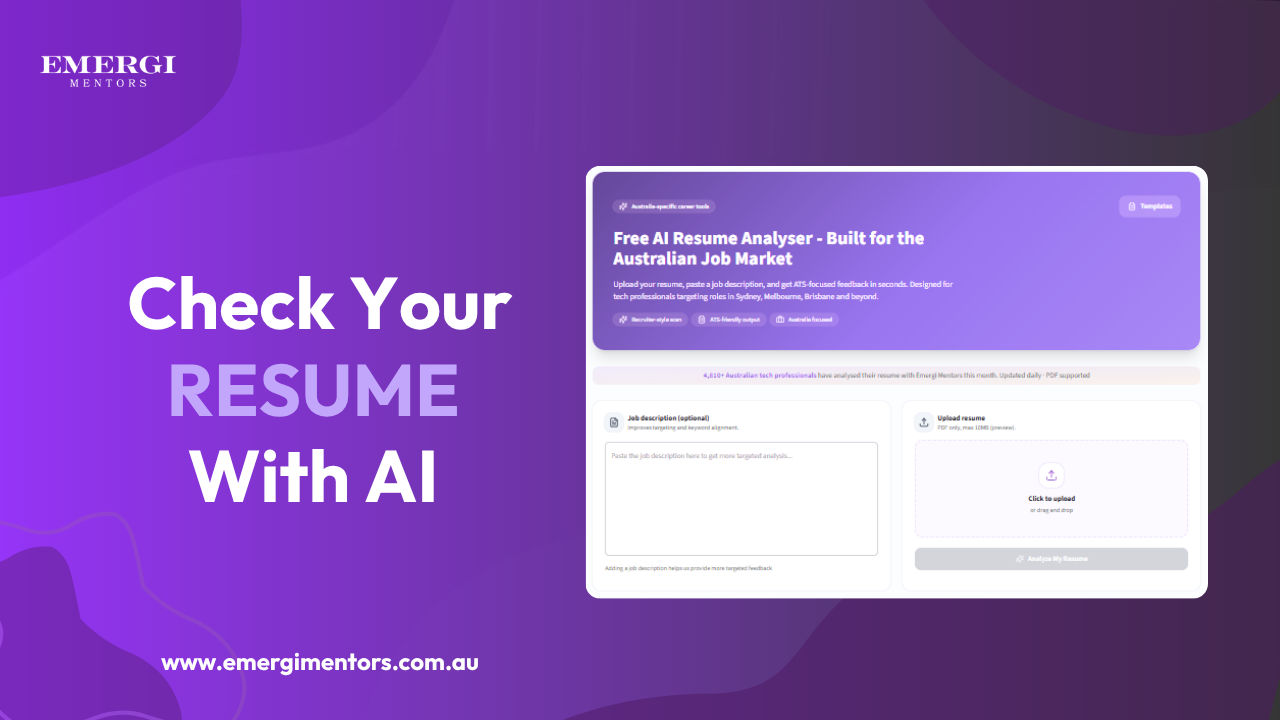
Using the Emergi Mentors Free Online Resume Analyser can transform your job search. Here’s how to make the most of it:
Access the platform: Visit Emergi Mentors and create an account to get started.
Upload your resume: Submit your resume for analysis and any relevant job descriptions.
Review and revise: Read the feedback, prioritise the suggested changes, and update your resume accordingly.
The analyser streamlines optimisation so you can present your strongest credentials to employers.
Step-by-Step Guide to Getting AI Resume Feedback
Getting automated resume feedback is straightforward and can make a real difference. Follow these steps:
Create an account: Sign up on the platform.
Select analysis type: Pick a general review or a specific ATS-focused check depending on your needs.
Implement feedback: Apply the recommended changes and re-run the analysis if needed.
These steps let you turn automated feedback into improvements that increase your interview chances.
How to Interpret and Apply Resume Analysis Results for Maximum Impact
Start by understanding the feedback and prioritising the highest-impact changes, typically formatting, keyword use, and clearer role descriptions.
Make changes systematically and tailor each resume to the job you’re targeting. This proactive approach maximises the effectiveness of your application.
Common Resume Mistakes and How to Avoid Them
Candidates often make errors that hurt their chances. Avoid these common resume redflags:
Generic language: Vague phrases weaken impact. Be specific about outcomes and your role in them.
Poor formatting: Inconsistent or cluttered layouts distract from your achievements.
Missing key industry skills: Make sure you highlight the technical skills most relevant to the job.
Being aware of these mistakes lets you focus your edits where they matter most.
Which Resume Errors Reduce Your Chances in Tech Job Applications?
Some errors have a particularly negative effect. Avoid these critical issues:
Repeating information: Redundancy makes your resume feel unfocused. Ensure each section adds unique value.
Overly long resumes: Keep your resume concise and relevant, typically one to two pages depending on experience.
Ignoring ATS compatibility: Failing to optimise for ATS can cause automatic disqualification before a human sees your resume.
Fixing these problems helps your resume perform well with both ATS and hiring managers.
How Resume Analysis Tools Identify and Fix These Mistakes
Resume analysis tools detect issues like vague language, inconsistent formatting, and missing keywords. They offer specific recommendations to help you make targeted improvements.
Tools also suggest stronger action verbs, clearer phrasing, and better organisation so your resume tells a compelling, easy-to-scan story.
Where to Find Additional Resources and Support for Tech Career
You can find extra resources and support from several places:
Online platforms: Career sites offer templates, guides and interview tips.
Networking opportunities: Professional networks often lead to mentorship and job leads.
Mentorship programs: Programs provide tailored guidance and ongoing support aligned to your goals.
Use these resources alongside resume analysis tools for a rounded approach to career growth.
Enroll in Mentorship Programs for Personalised Career Guidance
Joining a mentorship programme can change the direction of your career. Get started by:
Identifying your needs: Clarify your goals and what guidance you need.
Exploring options: Research programmes that match your interests and career stage.
Setting expectations: Communicate your objectives clearly to ensure a productive mentorship relationship.
Following these steps helps you secure mentorship that delivers practical insight and long-term support.
Frequently Asked Questions
1. What should I look for in a resume analysis tool?
Pick a tool with AI-driven analysis, ATS compatibility checks, and clear, actionable feedback. Tools that compare your resume to job descriptions, suggest formatting and content fixes, and support cover letters will be most useful. A user-friendly interface and near realtime feedback speed up your workflow.
2. How often should I update my resume?
Update your resume after major milestones, finishing a project, learning a new skill, or changing roles. For each application, tailor it by adding relevant keywords and examples that match the job.
3. Can mentorship programmes help with resume writing?
Yes. Mentors offer personalised feedback from industry experience, helping you highlight strengths, sharpen how you present achievements, and align your resume with market expectations to increase interview potential.
4. What are some common mistakes to avoid when using resume analysis tools?
Don't ignore the tool's feedback or fail to apply suggested changes. Also avoid relying only on automated suggestions, personalise the content so your resume reflects your voice and real experience.
5. How can I ensure my resume is ATS-friendly?
Use simple formatting with clear headings and bullet points. Avoid complex layouts or graphics that might confuse ATS. Include relevant keywords in skills and experience sections and save your resume in common formats like .docx or .pdf.
6. What role does keyword optimisation play in resume analysis?
Keyword optimisation helps your resume match job requirements. ATS scan for specific terms to assess fit; using industry-relevant keywords strategically increases your visibility to recruiters and improves the chances of passing filters.
7. How can I leverage feedback from resume analysis tools effectively?
Review suggestions carefully, prioritise fixes for formatting, keyword use, and clarity, and implement changes systematically. Combine automated insights with mentor or peer review to balance data-driven recommendations with a human perspective.
Conclusion
Using resume analysis tools together with mentorship can noticeably improve your outcomes in the tech industry. These resources offer personalised feedback and strategic insight so your resume stands out to both ATS and hiring managers. Pair automated analysis with expert guidance to refine your approach and increase the likelihood of landing your target role. Start optimising your resume today and consider mentorship to speed up your career progress.