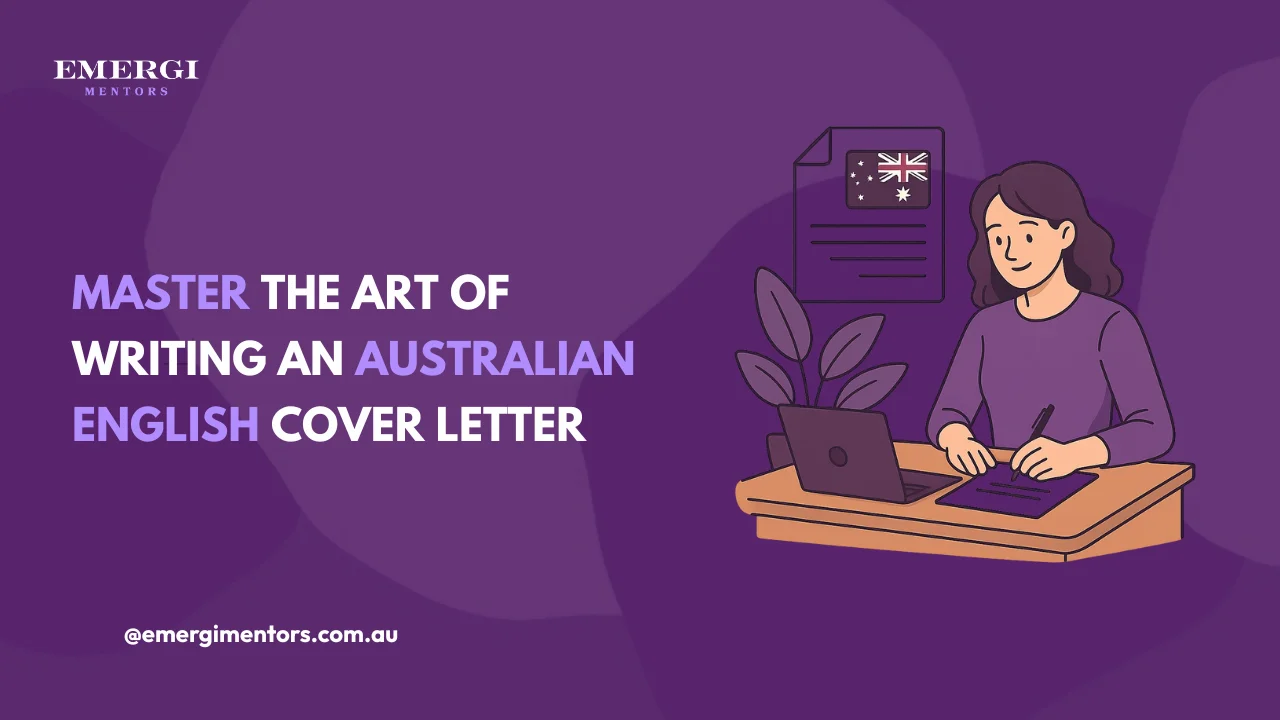
Cover Letter Sample AU: Make Free Cover Letter with Template

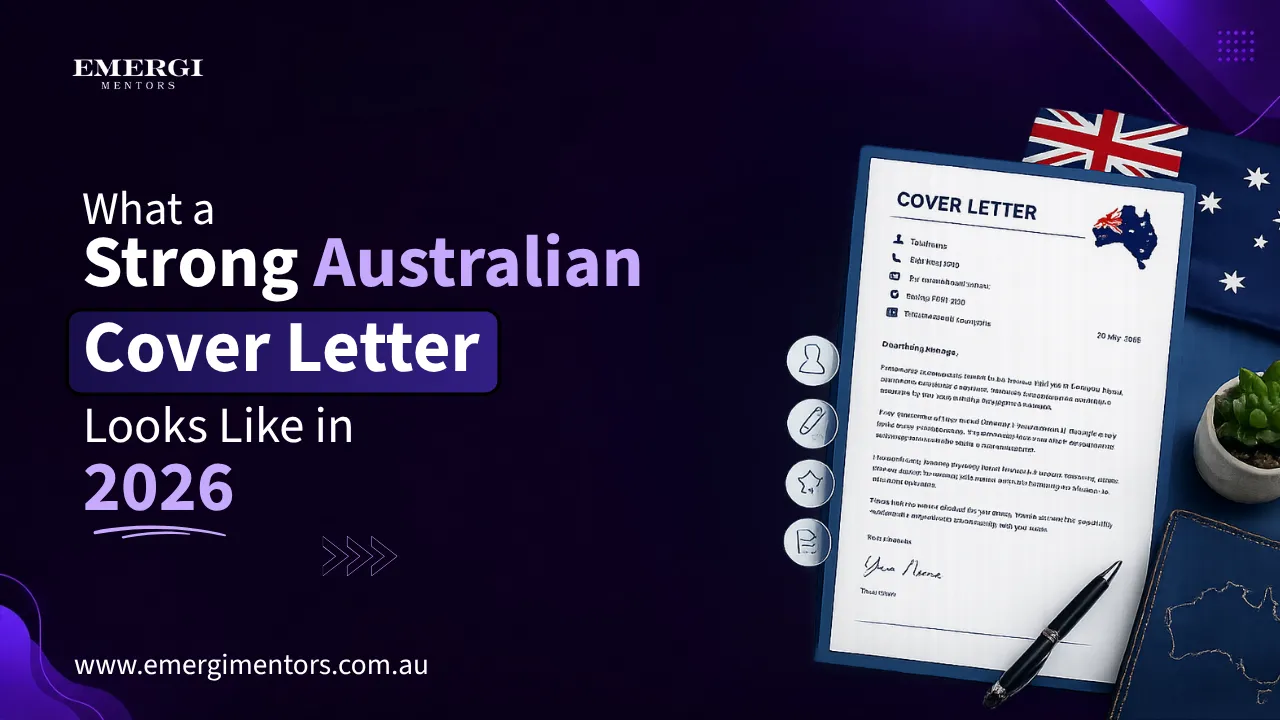
When you typed 'cover letter sample au' you needed something specifically for Australian market that works, not a generic template that sounds like it was written for a job market that no longer exists. That's a fair instinct.
The truth is that most cover letter tips and samples floating around online were built for a US or UK audience. The tone is different, the expectations are different, and the hiring culture is different. Australian recruiters and hiring managers pick up on this immediately.
We’ll help you understand what a strong Australian cover letter looks like with a real sample, section-by-section, plus honest guidance on tailoring it to the tech and data roles that dominate today's job market.
Why Australian Cover Letters Have a Distinct Style
The way of writing cover letter in Australia is different from other countries and the Australian workplace value directness, a conversational tone, and genuine self-awareness over polished corporate language. A cover letter that sounds overly formal or self-promotional can actually work against you.
A cover letter’s primary function is to demonstrate cultural fit and examples of your written communication style; according to the University of Melbourne. It doesn’t just shorten your resume. That means how you write matters as much as what you write.
A few things that set Australian cover letters apart:
They're shorter. Using one page is standard, and three paragraphs are often enough.
Don’t start with 'I am writing to express my interest in...' Australian recruiters have read that sentence ten thousand times. The opening should be direct.
Listing skills is not enough. Instead of saying 'I have strong analytical skills,' you'd say what you achieved with them.
The tone is confident but not boastful. There's a cultural expectation of understated competence.
A Good Cover Letter Sample for Australia
Use this sample cover letter for a data analyst role in Australia as a working model, not something to copy word-for-word, but something to understand structurally.
Subject: Data Analyst Application [Your Name]
Hi [Hiring Manager's Name],
For the past three years, I’ve worked to make decisions from messy datasets first in a retail analytics role and now in fintech. I saw this role at [Company Name], and the problem space was very close to what I’ve been working on, so I’m applying.
In my current position at [Current Employer], I created a customer segmentation model that reduced waste in marketing spend by 18% over two quarters. I work on SQL, Python, and Tableau daily, and I've become the go-to person of my company when stakeholders need to understand what the data is stating.
This chance at [Employers’ Company Name] appeals to me specifically because of how you've approached [specific product/initiative of that company]; it shows a data culture that values interpretation, not just reporting. I wish to work in this evnironment.
I'd appreciate the chance to talk and explain how my experience relates to your team's goals.
Thanks for your time, [Your Name] | [LinkedIn] | [Phone]
Your cover letter should open with context, not credentials. It should give one concrete result, references the company specifically and close cleanly without an extended sign-off.
Detailed View of Cover Letter Sections
The Opening Line
The weak opening line is where most applications lose the reader. Avoid openers that are self-referential, such as ‘I am writing to apply’ or ‘I am a passionate professional’. Instead, open with context, what you've been doing, or what led you to this specific role.
The goal of your first two sentences is simply to get the recruiter to read the third.
The Middle: One Result, not a Resume Summary
Your resume already lists your experience. The cover letter is to make one of those experiences feel real and relevant to the job. Pick the result that most directly shows what the role is asking for, and describe it briefly in what the situation was, what you did, and what changed. Numbers may help, but they're not mandatory.
The Company Mention
This is the single most overlooked section in cover letters sent by candidates who are applying for twenty roles at once. Hiring managers can tell when a letter is generic. One sentence that shows you've read their website, understood their product, or noticed something they've published goes a long way.
It doesn't need to be elaborate. 'I read your CTO's post on building data pipelines for real-time logistics, and it reflected challenges I've navigated firsthand' is enough.
The Close
Keep the closing lines simple. You don't need to beg for an interview or thank them extensively for their time. A clean, confident close such as 'I'd welcome the chance to discuss this further' is more effective than an anxious sign-off.
Common Mistakes That Effect Australian Cover Letters
We have seen that most job seekers make these short mistakes while writing the cover letter that gets their cover letter ignored:
Long introductory paragraphs and U.S.-style structure are not good for Australian cover letters.
Copying a sample without adapting the company reference. Recruiters notice immediately when the company reference is clearly generic.
Focusing on what the role offers you, rather than what you bring. Mention your interest briefly, then pivot to value.
Sending the same letter for different industries. A cover letter for a software engineering role and a data analyst role should feel different, even if your background overlaps.
Making the cover letter too long. If a recruiter needs to scroll, they probably won't
Cover Letter for Tech and Data Roles
Roles in data science, engineering, and analytics are in high demand, especially in Sydney, Melbourne, and increasing in Brisbane too. But the competition has also grown sharply, and a strong application is no longer just about having the right technical stack.
Your cover letter is often the first test of who can communicate their technical work to non-technical stakeholders. Hiring managers are increasingly looking for candidates.
A few sector-specific things you should consider are that give reference to specific tools only if they're in the job description. And if you've contributed to open-source projects, built a portfolio, or published any public work, mention it briefly. A link is better than a description.
For junior roles show what you've contributed to open-source projects, if you built a portfolio, or published any public work, mention it briefly. A link is better than a description.
If you're actively preparing for tech or data roles in Australia and want structured support, Emergi Mentors connects you with experienced professionals who've navigated exactly this process. Our career guide on Australian cover letters includes free templates built specifically for this market worth bookmarking before you apply.
Tailoring vs. Templating: The Practical Balance
It’s obvious that most job seekers don't have time to write a fully original cover letter for every application. The answer isn't to go fully generic; it's to create a smart base and identify the three things you change every time which include the company mentions, the role-specific result you lead with, and the opening line. If you get these three things right, the rest of the letter can be consistent without feeling copy pasted.
Templates can help with structure and formatting, but they need to be the right kind of template. It should reflect the Australian hiring expectations, formatted correctly for ATS (applicant tracking systems), and is easy to customise quickly.
We have put together a set of ready-to-use cover letter templates designed specifically for tech and data roles in Australia. They're formatted for ATS compatibility and built around the principles in this article worth using as a foundation rather than starting from a blank page.
A Note on Format and Submission
Most Australian employers expect a PDF submission unless the job ad specifies otherwise. Make sure your formatting holds up in PDF; some Word documents show differently when converted.
Standard formatting rules apply. Use 11–12pt font, clean sans-serif (Calibri, Arial, or similar), standard margins, and no decorative elements. Hiring managers are reading fast.
If submitting via a platform like SEEK or LinkedIn, some systems alter formatting entirely. In that case, plain text is better than a layout that breaks during imports.
What Makes a Cover Letter Stand out
After speaking with recruiters and hiring managers across the Australian tech sector, the feedback is consistent that the cover letters that get remembered are specific, honest, and brief.
Specific means a real situation, a real result, a real reason for applying to this company. Honest means no inflated claims, no buzzword density, no forced enthusiasm, and brief mean every sentence is valuable. If you can cut it without losing meaning, don’t add it.
The sample above isn't perfect for every role or every person. But the principles behind it such as direct opening, one concrete result, genuine company reference, and clean close works across industries and experience levels.
Final Thoughts
A cover letter is a short piece of professional writing. It doesn't need to be clever. It needs to answer the question every hiring manager is asking. Why should we take thirty minutes to speak with this person? Answer as clearly as possible.
If your cover letter answers that question with evidence, in simple language, under a page, then it's doing its job.
Frequently Asked Questions
What should an Australian cover letter include?
A strong Australian cover letter needs a direct opening, one specific achievement with context, a genuine mention of the company, and a clean close.
How long should a cover letter be in Australia?
One page maximum, and shorter is often better. Three to four focused paragraphs is the standard expectation.
Is a cover letter required when applying for jobs in Australia?
Not always, but skipping it when it's optional is a missed opportunity. A well-written cover letter is often what separates shortlisted candidates from those who don't hear back.
Can I use a cover letter template for Australian job applications?
Yes, a good template ensures structure and formatting, so you can focus on personalizing the content.