What Are Job Readiness Skills? Learn What Employers Want
You have polished your resume, practiced your interview answers, and applied to multiple jobs. Yet somehow, you're still not getting callbacks. Does it sound familiar? Here's the reality: having the right qualifications on paper is not enough anymore. Employers are searching for something much deeper: job readiness skills.
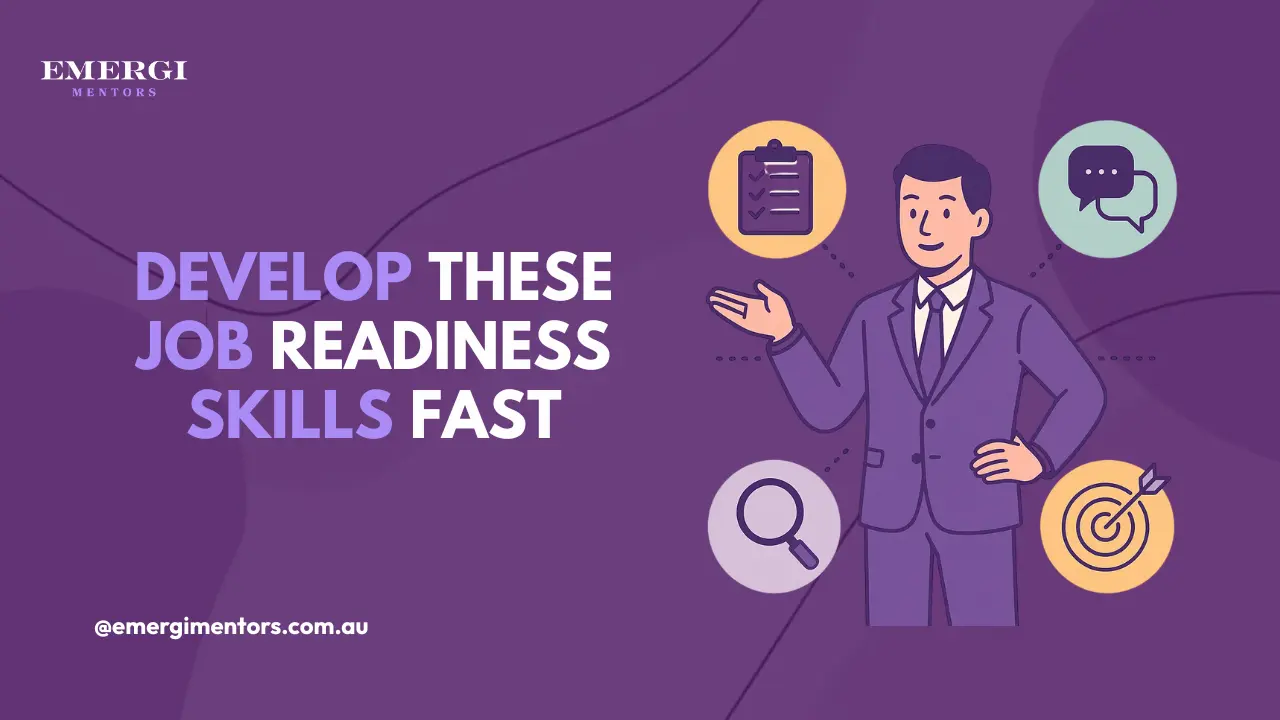
But what exactly are job readiness skills? They are practical abilities and personal qualities that make you effective in your job from day one. Think of them as a bridge between "I have the skills" and "I can deliver results." Let's learn what employers want in 2025 and how you can develop these job-ready skills quickly.
If you are not sure where you stand in your career, book a free career guidance call with experienced professionals at Emergi Mentor to evaluate your current skills and create a tailored development roadmap.
Job Readiness Skill Employers Recognise
You should not use generic buzzwords like "hardworking" or "team player." According to World Economic Forum's Future of Jobs Report 2025, employers are prioritising specific skills along with measurable abilities.
Here's what tops the list:
Problem Solving and Critical Thinking
Analytical thinking is the most crucial core skill, with seven out of 10 companies considering it essential in 2025. Employers look for professionals who can be quick to identify issues, propose solutions, and make smart decisions without constant supervision.
You display this by:
Breaking complex problems into manageable parts
Asking the right questions before jumping to solutions
Considering different options based on evidence
Learning from mistakes and adjusting your strategy
Communication Skills
According to NIH, written communication ranks among the top three skills employers are searching for in 2025. See the image by National Association of Colleges & Employers (NACE).

You need to acquire this essential skill by learning to express ideas clearly, listen actively, and alter your message for different audiences. Strong communicators have following traits:
Write clear, concise emails, and reports
Confidently present ideas in meetings
Give and receive constructive feedback
Teamwork and Collaboration
More than 80% of recruiters seek candidates who have strong teamwork skills. (NACE’s Job Outlook 2025). Modern workplaces thrive on collaborations, often across time zones, departments and cultures.
Effective team players respect different working styles of colleagues. They share credit and support peers. Professionals who handle conflicts and contribute to positive team cultures are valued by employers in every sector.
Adaptability and Resilience
Adaptability, flexibility and resilience are fundamental traits of successful professionals in Australia. The workplace evolves fast, and companies need people who adapt to the changes quickly.
Adaptable professionals stay calm when plans change suddenly
They are quick learners of new tools and technologies
Shift strategies when something is not working according to plan
View challenges as opportunities to grow
Digital Literacy
Technology is in every new role now, regardless of your field. You don't need to be a programmer but must know a few digital tools to thrive in your career.
Essential digital skills include:
Familiarity with common workplace software like Zoom, Microsoft Teams, Slack etc.
Ability to learn new platforms quickly
Understanding of online security and privacy
Basic data analysis and data interpretation
Self-Management
Self-management capacities, such as resilience, active listening and stress tolerance, rank among the most important abilities through 2025. Employers prefer individuals with self-management skills, who stay motivated and manage their time. They own their success.
Strong self-managers prioritize tasks effectively
Meet deadlines without micromanaging
Achieve personal goals
Seek feedback and act on it
Why Job Readiness Skills Matter More Than Ever
Technical skills provide chances, but job readiness skills keep them open. They determine whether you get hired and how quickly you contribute to your organisation. These skills often decide how far you advance in your career.
These skills are transferrable across industries. When you switch jobs, your communication skills and problem-solving abilities also come with you.
How to Develop Job Readiness Skills Fast
You can develop these job readiness skills much faster than getting another degree.
Practice in Real Situations. Theory can only benefit you in some ways, but these skills help you in the long run. Apply these in actual circumstances. Volunteer for projects that test your abilities. Join communities or clubs. Take on leadership roles in your team.
Get Constructive Feedback. You can't improve something you don't measure. Ask your colleagues, managers, or specific mentors to give feedback on your skills. What are your strengths and weaknesses? Where should you focus more for development?
Learn From Others. Watch how professionals in your field thrive? How do people handle stress and difficult situations? What methods do they use to communicate difficult news? In what way do your managers collaborate with tricky teammates?
Invest in Structured Development. Working with an experienced mentor speeds up your growth by 5x. Emergi mentors help you identify skill gaps, practice in low-stakes environments, and build confidence before you need these job readiness skills in challenging situations.
Mentors provide:
Honest evaluations of your current abilities
Targeted training to develop specific skills
Real-world scenarios to practice in
Ongoing feedback and accountability
Industry insights you can't find in books
Showcase Your Job Readiness Skills
Once you have gained these skills, you just need to present them effectively.
On Your Resume:
Use unique examples with measurable outcomes
Show how you solved problems or improved processes
Highlight multi-disciplinary collaboration
Mention any leadership or mentoring experience
In Interviews:
Prepare stories that showcase different skills
Use the STAR method (Situation, Task, Action, Result)
Ask thoughtful questions about obstacles you'd face
Show off your listening skills by building on interviewer remarks
During Work:
Volunteer for visible projects
Document your contributions and wins
Seek opportunities to present or lead
Build relationships across the organization
Your Next Steps
Knowing what job readiness skills are is just the beginning. The real work happens when you develop these abilities and showcase them consistently in your tasks.
Start with one skill to focus on this month. Practice it intentionally. Get feedback and adjust your approach accordingly, then move on to the next skill.
Your career depends more on how you present your skills and abilities than on what you know. How you apply your knowledge and adapt to changes is the skill that job readiness gives you.
Are you ready to accelerate your skill development? Ask for a 1:1 mentorship session with Emergi Mentors today. Get personalised advice on skills you should prefer based on your unique journey. Your next career breakthrough starts with a conversation.